The making
How a porcelain flower is made
Each House of Dehua flower starts as a lump of porcelain clay in Dehua, Fujian. Every petal is pressed thin by hand, curved, and set in place one at a time; a single peony takes dozens. The finished flower is fired in a kiln and then coloured, so it never wilts.
The film
From clay to kiln in 38 seconds
Studio footage is filmed in the Dehua studio. Shots marked AI-assisted are rendered from photographs of our flowers and studio to show each stage clearly.
Six stages
From clay to kiln
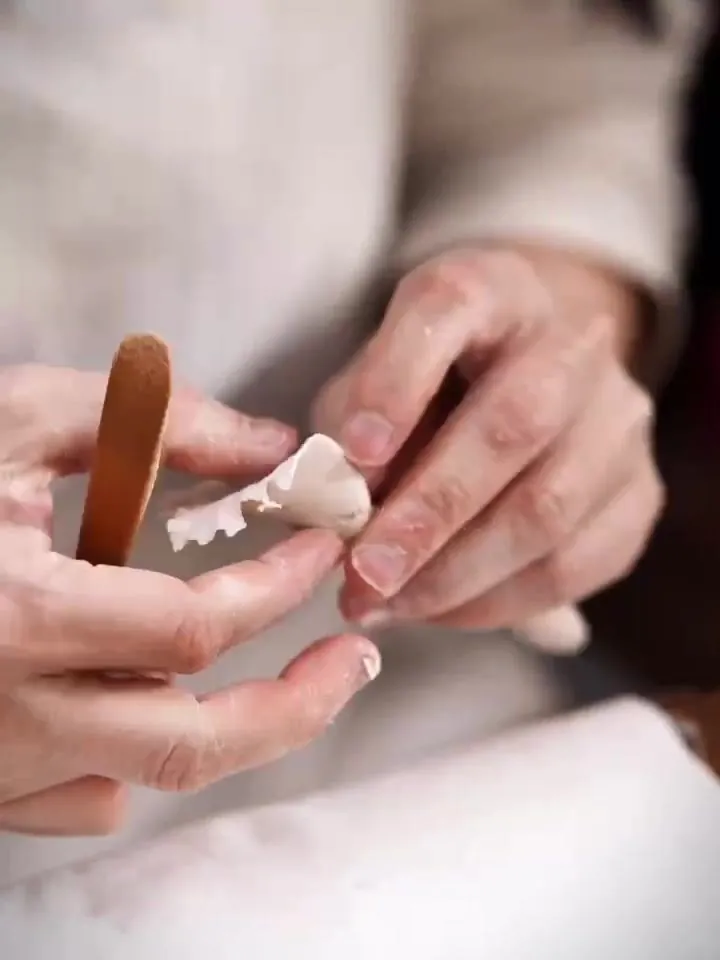
1 Clay
Each flower begins as a lump of fine porcelain clay from Dehua.
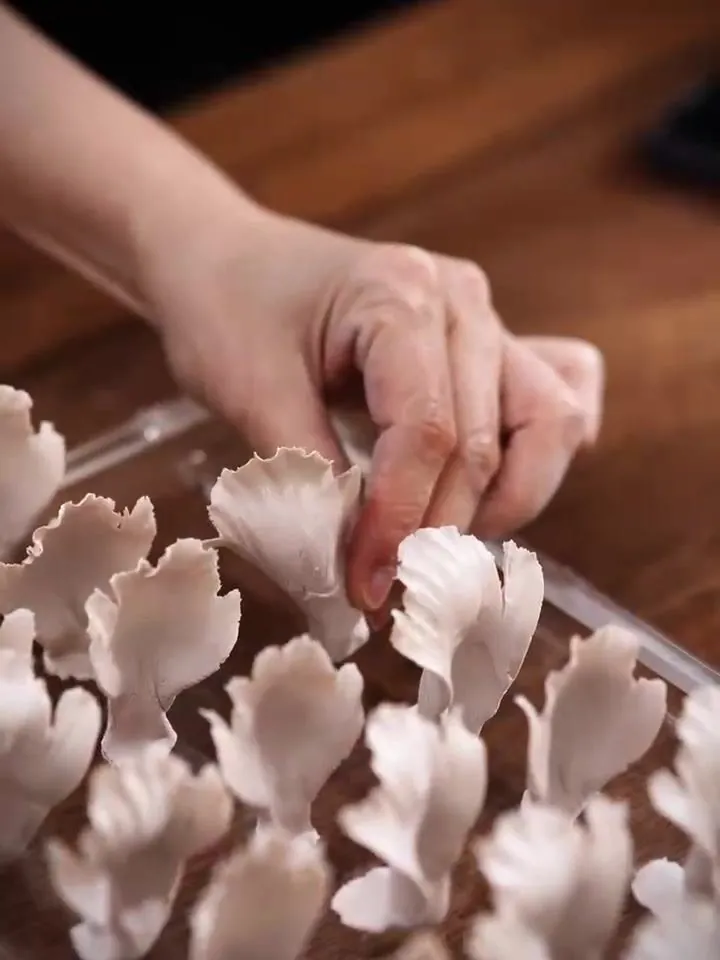
2 Petals
Petals are pressed thin between finger and thumb and curved while the clay is soft.
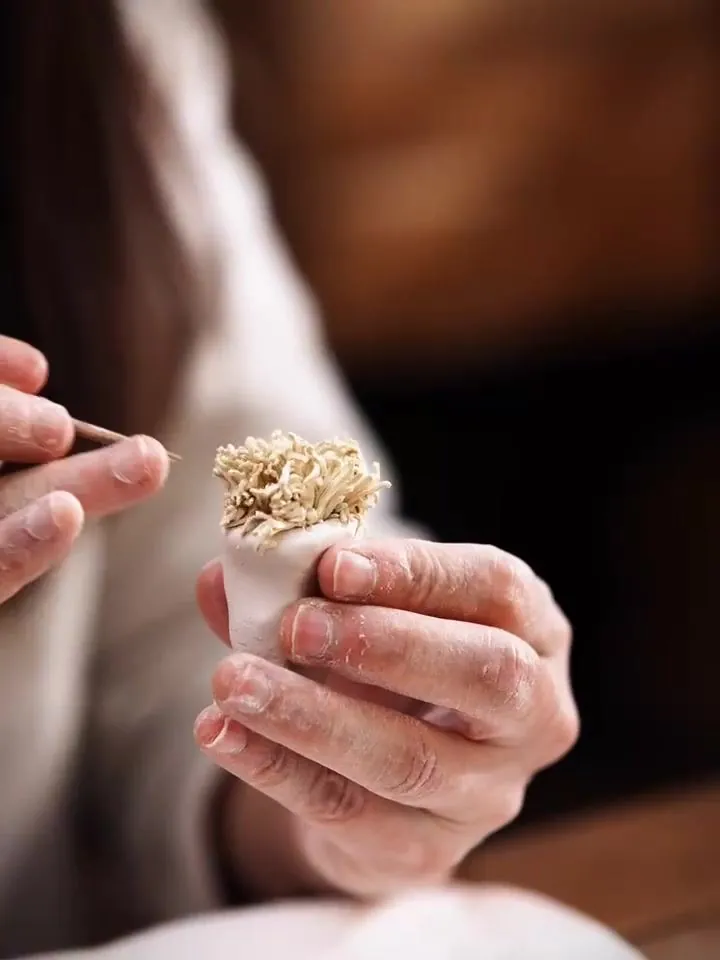
3 Centre
The bloom is built outwards from the stamen, one ring at a time.
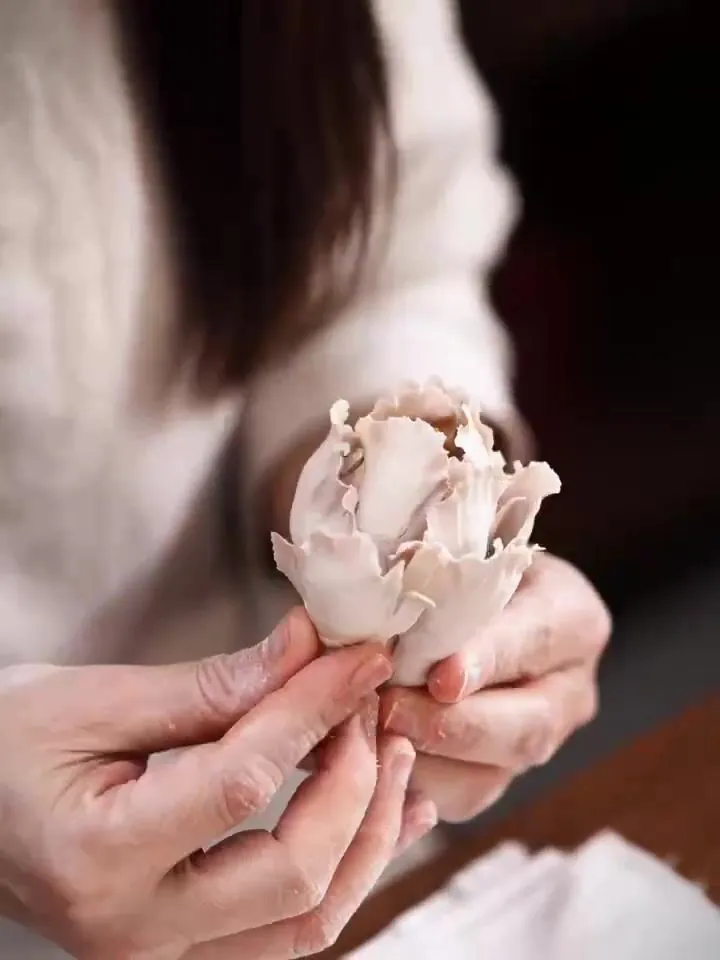
4 Bloom
Petals go on one by one. A single peony takes dozens.
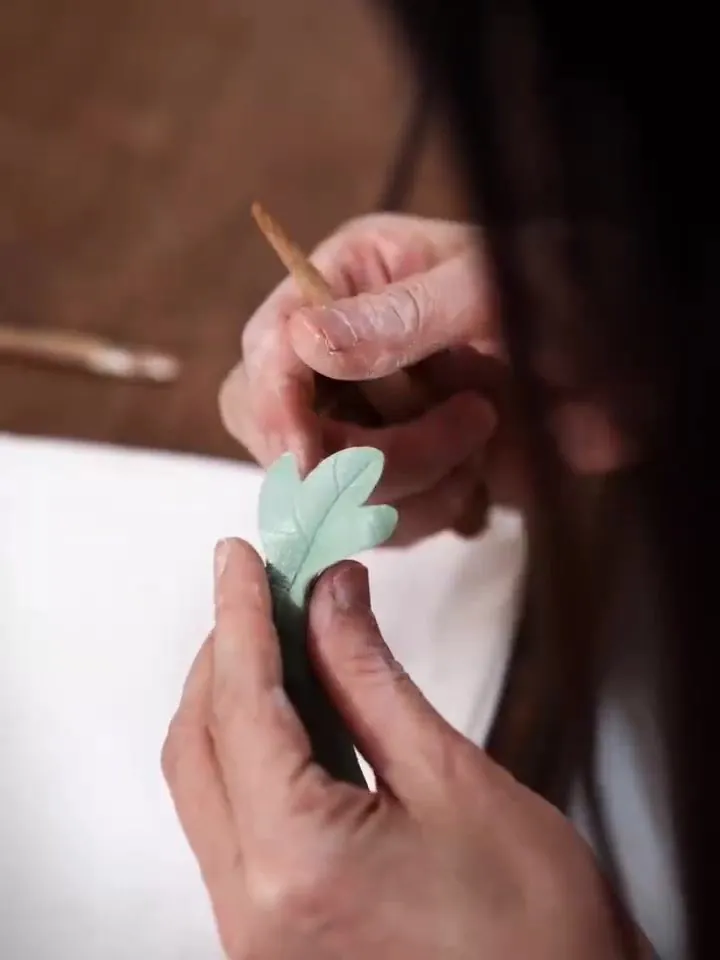
5 Leaves
Leaves are shaped and set last, under the outer petals.
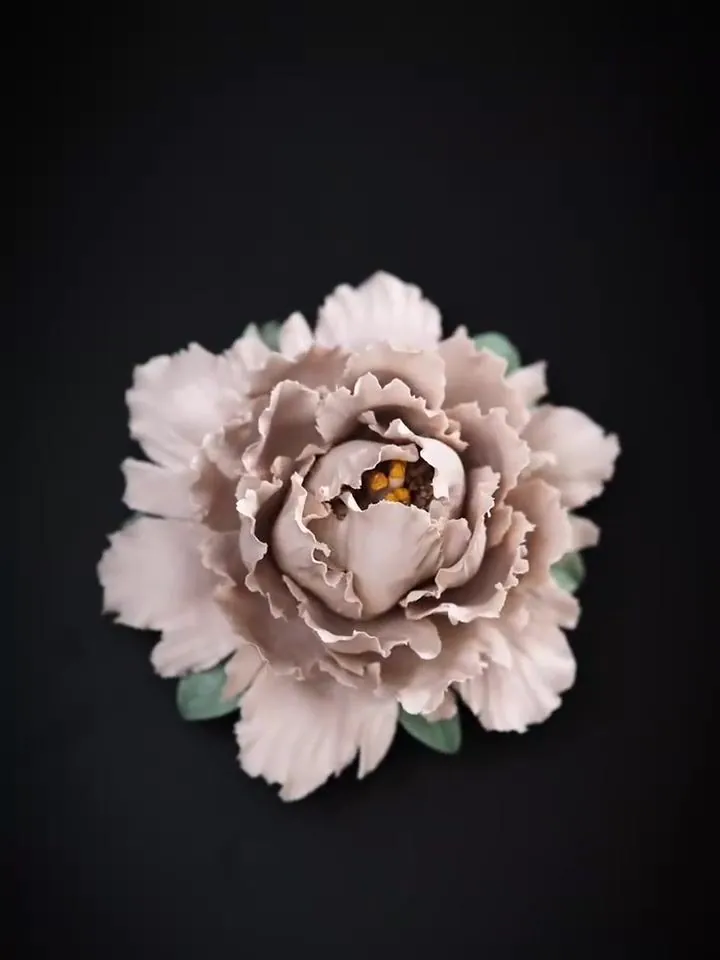
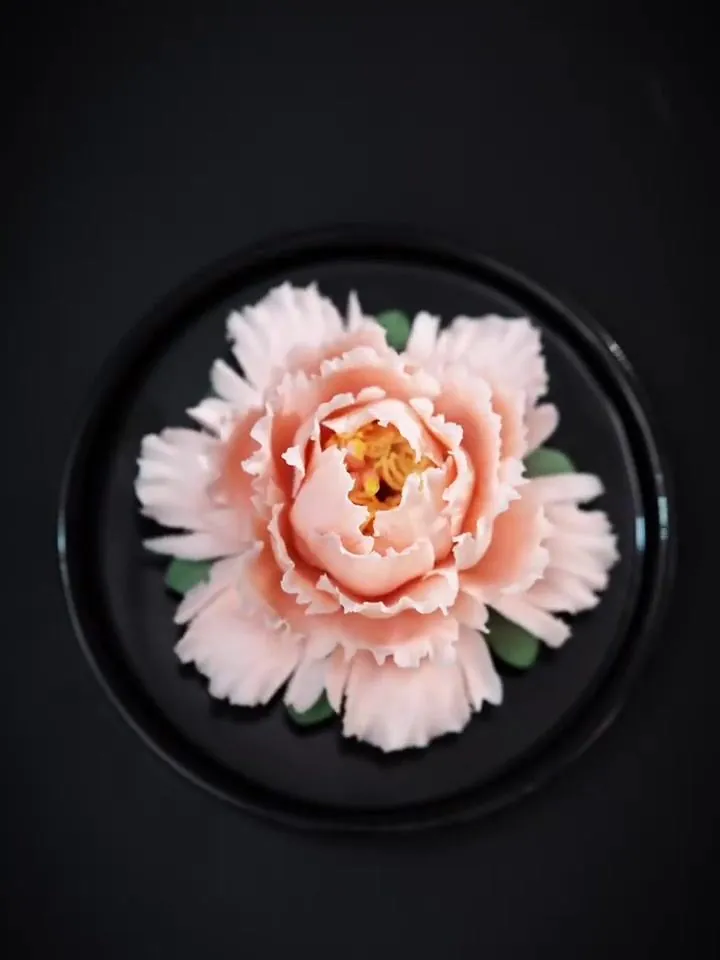
6 Fire and colour
The flower is fired, then coloured. Hover to see the change.
Dehua, Fujian
The porcelain town behind Blanc de Chine

Dehua, in Fujian province in south-east China, has fired white porcelain for centuries. Large quantities reached Europe in the early 18th century, where it became known as Blanc de Chine. In 2021 the Dehua kiln sites were inscribed on the UNESCO World Heritage List as part of Quanzhou.
Porcelain flowers are a living part of that craft. Our flowers are made by a small studio in Dehua: the same hands press the petals, build the bloom and send it to the kiln.